Funding the future of healthcare
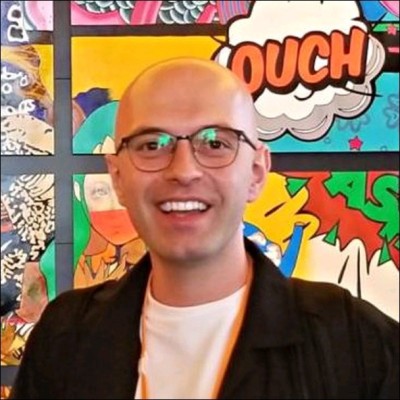
Fredrik Debong turned his own diabetes into mySugr, the first medical device app, and later into a second company and a specialist fund. His message for founders in regulated markets: the rules are your operating system.

01A personal problem first
Fredrik Debong lives with type 1 diabetes. While studying medical computer science, game design and psychology, he started rewarding himself for testing his blood sugar. It worked. He wondered why so few people were working on the psychology of the disease, when so many patients burn out.
That became mySugr. It made daily therapy more enjoyable and the data useful. It was the first app approved as a medical device, launched in 70 countries, and was acquired by Roche. He then co-founded hi.health, a payment service linked to health insurers, after seeing that people skip medication when even a small payment stands in the way.
02Deep knowledge in one place
He believes the interesting things happen where deep expertise in several fields meets. For him it was psychology, computer science and game design, all pointed at one condition.
Today he invests almost only around diabetes and chronic conditions. If it is about diabetes, he can probably judge it and help. A narrow field can still be a large market. Checking that people in it can pay is, in his words, basic homework.
- Lives with the problem
- Builds mySugr around it
- Exit to Roche
- Builds hi.health for payments
- Invests in the same field
03Regulation as an operating system
Founders fear the rules in healthcare and finance. He has come to like them. They exist, he says, because these products can be dangerous, and builders are responsible for the safety of the people they serve.
The rules also describe how to work well: how to track quality, notice when something breaks, and change it through a set process. If you build the company that way from the start, you already have a system for growing from ten people to two hundred. He calls it a kind of hack.
New rules also open doors. When a law changes how an industry must work, a startup that solves the new requirement has an opening.
“Regulations are there for a reason. It's because we do dangerous things.”
04What makes an exit
His view of acquisitions is practical. A large company buys you when you remove one of its big problems. In his case the buyer's margins were shrinking, and the service changed how it could sell. Know the market well enough to see what hurts the big players.
He also warns that the hard part of scaling is the organisation itself: two people, then ten, thirty, a hundred, two hundred. Prepare for that before it arrives.
“When you scale up the organization, two people to 10 to 30 to 50 to 100 to 200. That is the challenge.”
05From founder to investor
After an exit, helping other founders felt natural. He has been on both sides of the table and can help a company move faster. He is clear about the job, though. Running a fund is mostly fundraising, with investing as the smaller part.
His closing advice is about home. Before you start a company, make sure your family is with you. You will be busy for years, and you will need them.
What to take with you
- Start from a problem you know from the inside.
- A narrow field can be a big market. Check who pays.
- Treat regulation as a way of working, not a wall.
- You get acquired by solving a large company's real problem.
- Get your family's support before you begin.
This feature is an editorial summary of a public conversation hosted by Erdinc Ekinci. Quotes come from the recording and are lightly trimmed. Figures are the speaker's own. Nothing here is investment advice.
Keep reading
 Podcast · 58 min

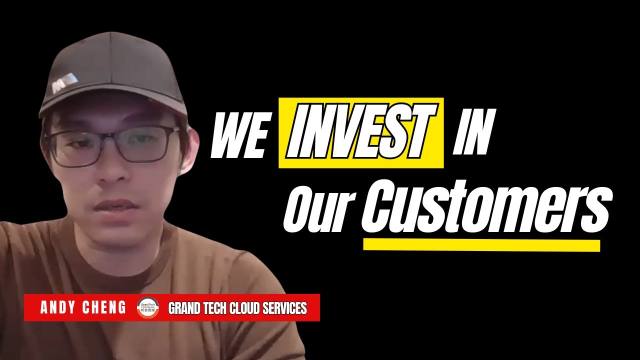
The corporate investor that backs its own customers
Andy Cheng · Head of Japan, GrandTech Cloud ServicesAndy Cheng leads investment at GrandTech Cloud Services, a listed cloud company in Taiwan. It invests in the startups that buy from it. He explains why, and what founders should understand about fit before they ask a company for money.Read the feature →Corporate funds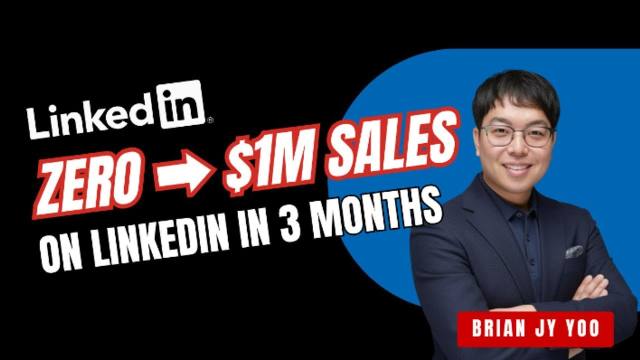 Podcast · 63 min
LinkedIn for founders: start before you feel ready
Brian JY Yoo · Founder, CareerLabBrian JY Yoo trains hundreds of students and company teams on LinkedIn every month. His method is small and daily: a clear purpose, one personal connection request, and posts about your plans, not your wins.Read the feature →Visibility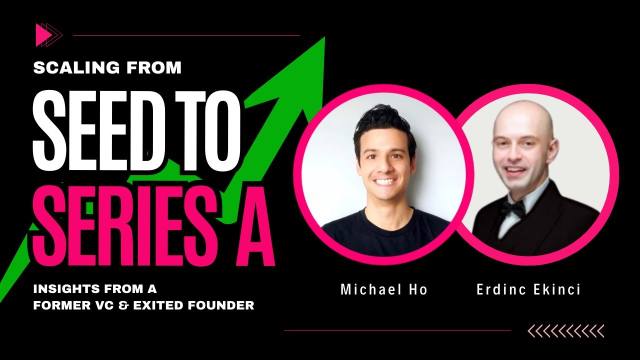 Investor session · 48 min