The VC who hates most VCs
David Yi of Ethos Fund went from his mother's restaurants to law, to founding companies, to investing. In front of a room of founders in Tokyo, he explained why Silicon Valley's playbook fails in Asia and what investors owe founders.
01Why most, not all
David Yi's first lesson in business came from his mother, an immigrant from Korea who ran restaurants. He helped as a teenager. He later became a lawyer, then a founder. His last company, in AI for education, raised $175 million from SoftBank.
He calls himself the investor who hates most investors, and stresses the word most. His reason is simple. A fund has two groups to answer to: the founders, and the people whose money it invests. When things get hard, most funds side with the money.
02Silicon Valley's playbook is one playbook
Silicon Valley looks for the next Google or OpenAI: ten bets in the hope that one wins big. That works for that kind of company. In Asia, many founders build what their own country needs. Those are good businesses, but they are not that bet.
Some investors back ten companies hoping all ten do well, for steady returns. It works, he says, but it asks more of the investor: real checks, shared meals, time to learn who the founder is.
He also learned that more money is not always better. When the $175 million arrived, the company did not know what to do with it. Sometimes you learn with a little money what to do with the next.
“I did not know what to do with that money. The entire company didn't know what to do with that much money.”
03A service business
His main complaint is that investors forget they run a service. They should be advocates of hope and new ideas. Too many have become gatekeepers who only serve the founders they picked.
For founders, his practical advice is to raise in more than one country. Investors in one city all know each other. Across borders they do not. Telling each side, truthfully, who else you are talking to creates interest. He is firm on the truthfully: he never lied about any of it.
“We should be the advocates of hope and innovation. But suddenly VCs have become gates.”
- Ten companies, one big winner
- Looks for the next giant
- Fits a small class of startups
- Ten companies, all should do well
- Looks for healthy returns
- Needs more work from the investor
What to take with you
- Ask which game an investor plays before you pitch.
- More money than you can use is its own problem.
- Good investors serve founders, including the ones they do not back.
- Raising across borders gives you an advantage. Stay truthful.
This feature is an editorial summary of a public conversation hosted by Erdinc Ekinci. Quotes come from the recording and are lightly trimmed. Figures are the speaker's own. Nothing here is investment advice.
Keep reading
 Podcast · 67 min
The old, ugly and boring physical AI opportunity
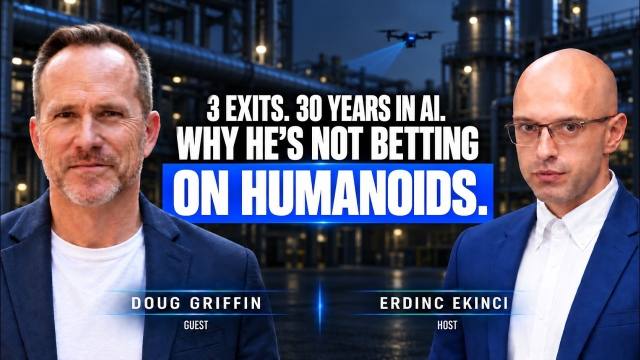
Doug Griffin · Founder and Managing Partner, Spatial CapitalDoug Griffin spent thirty years in computer vision, from film effects to four startups and three exits. His fund backs the unglamorous industries that run the economy, and stays away from humanoid robots on purpose.Read the feature →Physical AI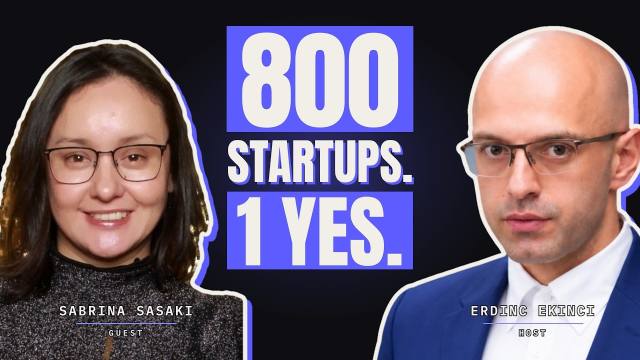 Podcast · 41 min
Physical AI is booming. Here is how robotics founders get funded
Sabrina Sasaki · Partner, Monozukuri VenturesSome robotics funds look at 800 startups before they invest in one. Sabrina Sasaki of Monozukuri Ventures explains what gets a founder to that one yes, and why pilots with big companies so rarely become paying customers.Read the feature →Physical AI Podcast · 90 min