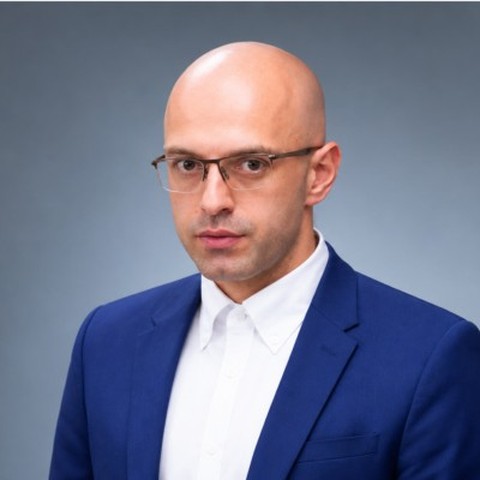

The old, ugly and boring physical AI opportunity
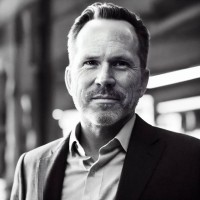
Doug Griffin spent thirty years in computer vision, from film effects to four startups and three exits. His fund backs the unglamorous industries that run the economy, and stays away from humanoid robots on purpose.

01From running injuries to robots that see
Doug Griffin was a triathlete studying exercise physiology when he kept getting injured. He started reading about biomechanics, the study of human movement. It was the mid 1990s. The first PlayStation and Toy Story had just come out. He saw that the science of motion and 3D graphics could be combined.
That idea took him into visual effects research at Industrial Light and Magic, then into four startups and three exits. Spatial Capital, his early stage fund, invests in what he calls adding intelligence to the physical world.
What changed, he says, is perception. Robots used to need every movement programmed, in a perfectly controlled space. Now machines can understand the world around them, so they can work in places that are not tidy.
02Old, ugly, boring
The fund does no consumer products. It looks for businesses in warehousing, agriculture, mining, energy and infrastructure. His examples: a company that maps forests tree by tree, and one that inspects ageing bridges with drones. Much of that infrastructure is about seventy years old.
He also sees a defence against AI here. Software alone is getting easy to copy. A device that captures something hard to see in the physical world is much harder to replace.
One more rule for business customers: the founder should come from the industry they build for. You need to know how those companies buy and work.
“We're looking for old, ugly, boring businesses. Things that run the economy, but aren't that sexy.”
03Why not humanoids
Most money in physical AI goes to humanoid robots. He gives two reasons for staying out. First, a robot shaped like a person is built to replace a person. He prefers machines that take the dirty and dangerous jobs. Second, he thinks they are overvalued, expensive to build, and hard to get adopted.
His design rule is fit for purpose. If the floor is flat, put wheels on it. There is no need for legs.
“If you're building a humanoid robot that you want to put on an industrial fabrication line, why do you need legs?”
04The traction ladder
Building is easier now, so even very early companies are expected to show proof. He ranks it from weakest to strongest: a respected person from the industry investing a little, a testimonial, an unpaid trial with a real customer, then a paid trial. Some early companies already have small monthly revenue. A signed letter from a large company saying it will work with you also counts.
It is fine to start as a service. Solve the problem by hand for a monthly fee while you build the product. At seed stage he wants revenue that grows month on month, even if it is small.
He almost never answers cold messages. Find someone who knows him and ask them to introduce you, or meet him at a demo day or a conference. And learn to describe your company in four to eight words. That is the length of the note his team keeps for each of the thousands of companies they review.
- An industry person invests a little
- A testimonial from the industry
- An unpaid trial with a real customer
- A paid trial
- Monthly revenue that grows
05Why you?
His last message is one question. Why are you, in particular, building this company? At the earliest stage the value is the people. He wants founders whose whole career led to this problem, and who are stubborn enough to get through the hard times.
“Why are you in particular building that company?”
What to take with you
- Unglamorous industries have large problems and fewer competitors.
- Hardware that captures hard-to-get data protects you from copycats.
- Build robots that fit the task, not robots that look like people.
- Show proof early: a paid trial beats a promise.
- Be able to say what you do in four to eight words.
This feature is an editorial summary of a public conversation hosted by Erdinc Ekinci. Quotes come from the recording and are lightly trimmed. Figures are the speaker's own. Nothing here is investment advice.
Keep reading
 Podcast · 41 min
Physical AI is booming. Here is how robotics founders get funded
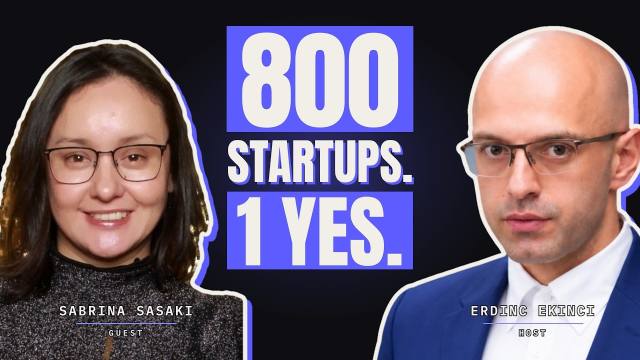
Sabrina Sasaki · Partner, Monozukuri VenturesSome robotics funds look at 800 startups before they invest in one. Sabrina Sasaki of Monozukuri Ventures explains what gets a founder to that one yes, and why pilots with big companies so rarely become paying customers.Read the feature →Physical AI Podcast · 90 min

This is how to go viral on social
Ahmet Yanik · Founder, Mavi GadgetAhmet Yanik grew Mavi Gadget to more than 62 million followers with no outside funding. He treats virality as something you can mostly engineer: volume, signals, timing, and a comment section you plan before you post.Read the feature →Visibility Podcast · 54 min