Want to start a VC fund? Start an angel syndicate first
Jed Ng runs Angel School, a 1,500-investor angel syndicate in Singapore, on his own. His advice to new investors is to start with a syndicate and grow into a fund, and he shows the math behind it.


01A self-taught angel who works alone
Jed Ng taught himself angel investing. He has backed two seed-stage startups that went on to become unicorns. Today he runs Angel School from Singapore, an angel syndicate with a network of 1,500 investors.
He has no staff. He told the session that his tools cost about $60 a month, and that people outside assume Angel School is a much bigger organisation than it is.
02Order matters: syndicate first, fund later
An angel syndicate is a group of angel investors who back startups together, one deal at a time. A first venture fund, in his experience, can take two to three years to raise. A syndicate can start investing within months.
His point is not that funds are bad. He said there is no structure that is better than the other. It is about sequence: invest, build a record, then raise a fund on that record. In his words, it makes more sense to start with a syndicate and then leapfrog to a fund.
- Two to three years to raise
- About 20% of capital goes to management fees
- Investors commit before the deals are known
- Can start within months
- The money goes into the deal
- Each investor decides on each deal
03Every deal starts with a no
For new angels, his first rule is discipline. Every deal starts with a no, and conviction has to be built from there. When a deal gets away, he does not chase it: there will always be another deal.
He described saying no to almost everything he sees. That discipline is what keeps a syndicate's investors coming back.
04A network built one call at a time
The 1,500 investors did not come from a mailing list. He speaks with each investor for about 30 minutes before they see his deal flow, and people wait for that call. The slow start is what makes the network useful later, because he knows who each investor is.
On the state of venture capital, he was direct: there are too many fund managers in the market, and the narrative that emerging managers outperform experienced ones does not hold up in the data, in his view.
05His worst deal and his best
His worst deal was an AI audiobook startup that did not work out. He put it down to two things he overlooked, one of them being how policy can choke off a market.
His best was Turing.com, which he backed at seed at a $15 million valuation. The company later raised its Series E at a $2.2 billion valuation. He told it as a lesson in early conviction, not as a promise of returns.
What to take with you
- If you want a fund, start with an angel syndicate and build a record first.
- Check how much of a fund's capital goes to fees before you choose a structure.
- Start every deal at no and let the founder and the data move you.
- Build your investor network through short one-to-one calls, not broadcasts.
- A one-person operation can run on simple tools if the systems are clear.
This feature is an editorial summary of a public conversation hosted by Erdinc Ekinci. Quotes come from the recording and are lightly trimmed. Figures are the speaker's own. Nothing here is investment advice.
Keep reading
 Podcast · 90 min

This is how to go viral on social
Ahmet Yanik · Founder, Mavi GadgetAhmet Yanik grew Mavi Gadget to more than 62 million followers with no outside funding. He treats virality as something you can mostly engineer: volume, signals, timing, and a comment section you plan before you post.Read the feature →Visibility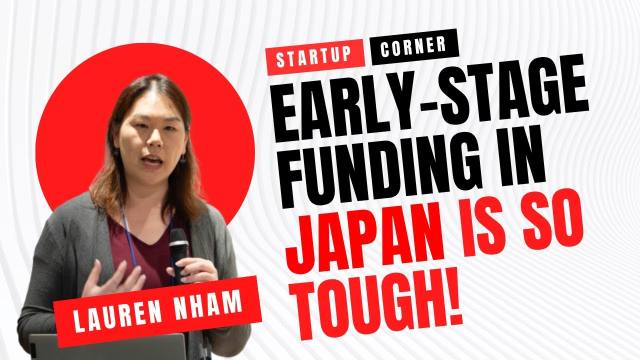 Podcast · 54 min

The harsh truth about fundraising in Japan
Lauren Nham · Tokyo AIRounds are smaller and investors play a different game. Lauren Nham of Tokyo AI explains what Japanese funds really expect, when debt beats equity, and the two questions to ask every investor before you pitch.Read the feature →Japan Podcast · 43 min