The hidden rules of venture capital
Rancho Lee of Simsan Ventures explains how a fund thinks: whose money it manages, what it looks at when a company has almost nothing yet, and why an investor has no safety net if you fail.

01A fund manages other people's money
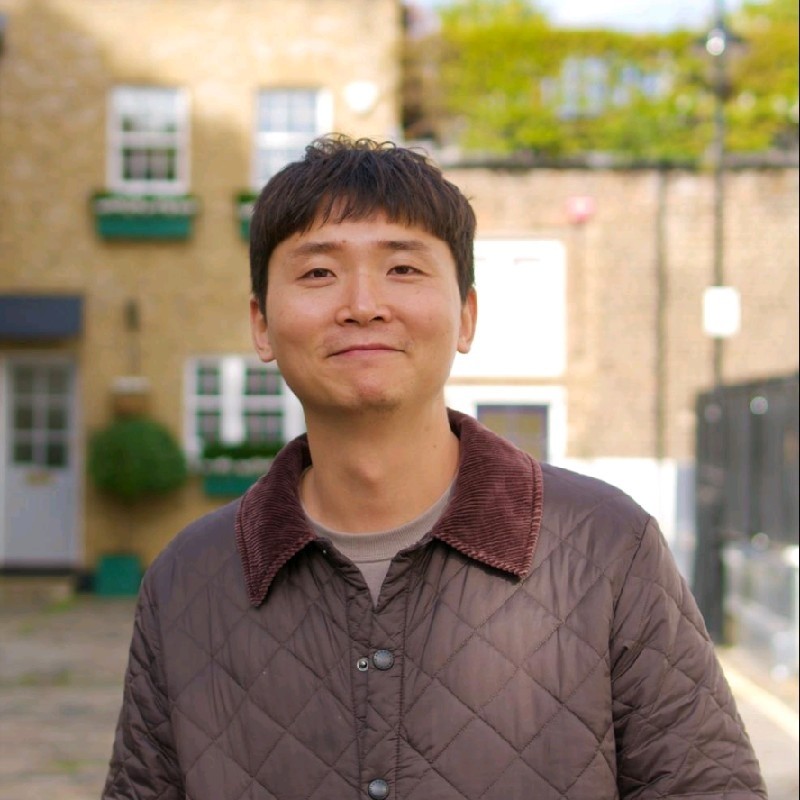
Rancho Lee starts with a basic fact many founders skip. A venture firm also raises money, from investors of its own. The firm manages that money, invests it, and has to give it back with a return. Once you know that, a fund's behaviour is easier to read.
He also says investors come in different types. The best one is the one that fits you, so learn how each type works before you choose.
02What they look at when there is nothing yet
At the earliest stage there is often no product, sometimes not even a registered company. So the investor is looking at the founder: the mindset and the ability to make informed decisions.
What counts as traction depends on the field. For software, numbers matter early. For deep technology, a contract or a proof of concept with a real customer can be strong evidence. By Series A and B, though, he is clear that you will not be funded without numbers.
03No backup plan
Asked what happens when an investment fails, his answer was short. There is no backup plan. A bank takes security when it lends. A fund does not. If the startup loses the money, the fund loses it too. That is why funds are strict about who they pick.
“If you blew the money, we also blew the money.”
What to take with you
- A fund answers to its own investors. Understand that first.
- At the start, investors back the person.
- Traction looks different in software and in deep technology.
- Later rounds need numbers, with no exceptions.
This feature is an editorial summary of a public conversation hosted by Erdinc Ekinci. Quotes come from the recording and are lightly trimmed. Figures are the speaker's own. Nothing here is investment advice.
Keep reading
 Podcast · 66 min
Rethinking the startup exit in Asia
Siong Yoong · Founder and CEO, VALLARISSiong Yoong has worked on mergers and acquisitions worth $1.5 billion. His view of an exit is simple: a buyer has a problem, and your company either solves it or does not.Read the feature →Exits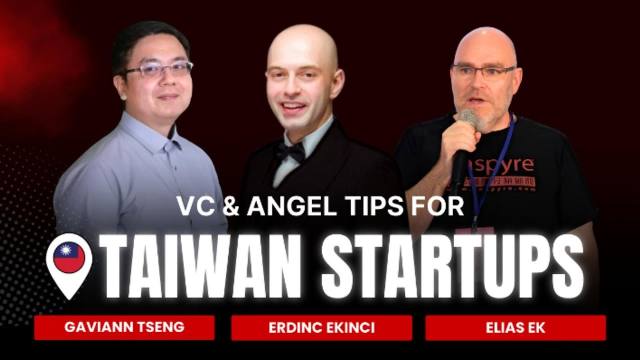 Panel · 74 min

Startup funding in Taiwan: a corporate investor and an angel explain
Gaviann Tseng, Elias EkGaviann Tseng invests for a corporate fund. Elias Ek is an entrepreneur and angel investor who runs a pitch event. Together they describe how founders meet investors in Taiwan, and the red flags that end a conversation.Read the feature →Taiwan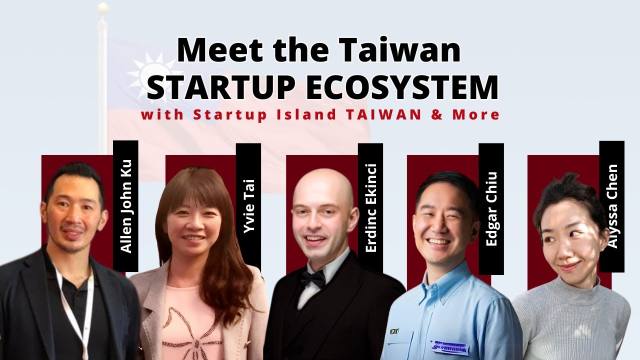 Panel · 74 min
 +1