CVC in Japan: how startups and large companies work together
Corporate venture capital has quietly become a backbone of Japan's startup scene. Yasumasa Saito of SBI Investment explains what a corporate fund gives beyond money, what it limits, and when it is the wrong door.

01A researcher who moved to investing
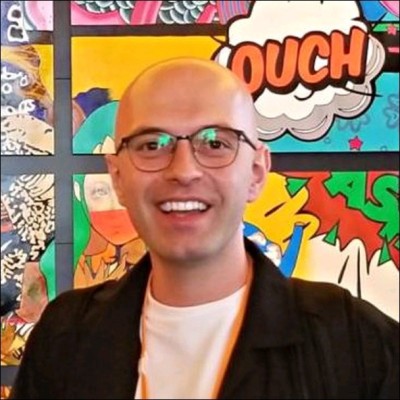
Yasumasa Saito has a PhD in agriculture. He studied how insect viruses can control pests, then spent eight years at Sumitomo Chemical, most of them in research. He spent time at a university in California and part of his childhood in Vancouver, so working across borders came early.
At SBI Investment he runs corporate venture funds together with large Japanese companies. SBI started the first one in 2016. Nine years later there are 21, and several partners have come back for a second fund.
02More than money
A corporate venture fund is still a venture fund. It invests for shares. The difference is what comes with it: joint research, a proof of concept, or use of the company's assets, such as a factory or a marketing team.
He gave one example from a fund run with a food company. It backed a startup working on a supplement to help babies avoid food allergies. For a food maker, allergy is a hard subject to handle alone. With a startup, it can.
Some funds go very early. If a company wants original technology from a university, his team will talk with a professor before a company even exists.
“We can do joint research or proof of concept, or using their each asset.”
- Looks for financial return
- Any sector that can grow
- You stay free to work with anyone
- Also wants a fit with the parent company
- Brings research, trials and assets
- Can limit work with the parent's rivals
03What a corporate fund looks for
Fit comes first. A gaming company may promise a good return, but it is not right for a fund tied to a food company. So the same startup can be attractive to a venture fund and wrong for a corporate one.
On sectors, every company is interested in AI. His personal view is that green and climate technology still has a long road ahead, even when politics turns against it for a few years. The 2030 and 2050 targets have not moved.
04The common mistake
Money has no colour, he says. A million dollars is the same from any investor. If all you want is the investment, a corporate fund is the wrong place to ask.
There is also a cost. A close partnership with one company can make its competitors less willing to work with you. Decide if the partnership is worth that.
For the companies, his advice is to keep going. A corporate fund that stops after five years hurts the company's name with founders. If a company is planning five or ten years ahead, he believes it needs one.
“If the companies are looking for five years or ten years ahead, the CVC is important.”
05A small market that is opening
Asked about the challenges for founders in Japan, he was direct. Business runs in Japanese, the venture market is a few percent of the US market, and there are far fewer startups. That is the current situation. It is also why companies and funds are now looking outward more than before.
What to take with you
- A corporate fund brings research, trials and assets, not only money.
- Check the fit with the parent company before you approach.
- If you only need capital, go to a venture fund.
- A deep partnership with one company can close doors with its rivals.
- University founders can talk to corporate funds before the company exists.
This feature is an editorial summary of a public conversation hosted by Erdinc Ekinci. Quotes come from the recording and are lightly trimmed. Figures are the speaker's own. Nothing here is investment advice.
Keep reading
 Investor session · 60 min
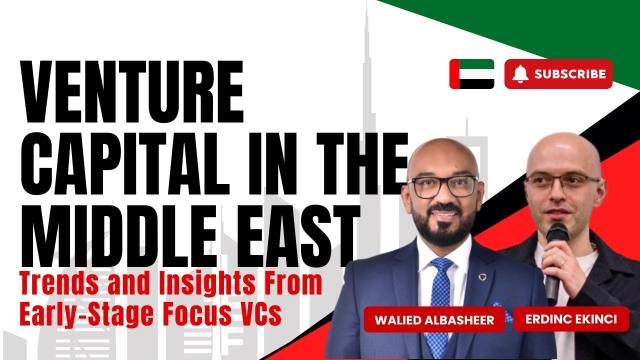
Venture capital in the Middle East
Walied Albasheer · Founder and Managing Partner, Intuitio VenturesWalied Albasheer of Intuitio Ventures has watched the region's startup scene grow from one famous acquisition to a full ecosystem. He explains what investors there look for, and why you cannot close a deal in five days.Read the feature →Middle East Podcast · 59 min

Funding the future of healthcare
Fredrik Debong · Co-founder of mySugr and hi.health, healthcare investorFredrik Debong turned his own diabetes into mySugr, the first medical device app, and later into a second company and a specialist fund. His message for founders in regulated markets: the rules are your operating system.Read the feature →Healthcare Podcast · 58 min