Why many non-US startups fail
Jeffrey Paine of Golden Gate Ventures gives the plain version: the return target a fund needs from you, the two problems he sees most, and why a product people talk about beats a hundred pitches.

01Start with the target, not the pitch
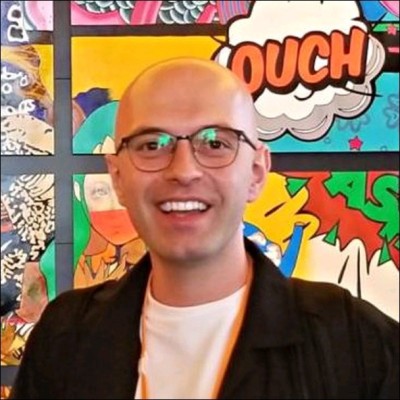
Jeffrey Paine co-founded Golden Gate Ventures in Singapore in 2012. The firm invests at Series A and earlier, mostly in Southeast Asia, with cheques from about $200,000 to $2 million. He opened this session by telling founders what a fund is looking for, in numbers.
Eight years after your first institutional investor, he said, you should be at $100 million in revenue, growing 20 to 30 percent a year, with margins of 55 to 65 percent or more. Run your own projections. If you can never reach that, the business is not one a venture fund can back. That is not a judgement on the business. It is the wrong kind of money for it.
“If you find that you can never hit that target, then you're not VC backable. Very simple.”
02A coffee chain or a new coffee bean
His test for which money fits is simple. A coffee chain in an emerging market is a private equity company. So is a chain of clinics, a co-working brand or a co-living brand. A coffee bean that makes you twenty years younger is venture. One grows by opening more sites. The other changes what is possible.
Many founders pitch the first kind to investors who only fund the second kind. He asked them to stop confusing the two before they spend a year on meetings.
“Do not get confused whether you're PE backable or VC backable.”
- A chain of restaurants or clinics
- Co-working, co-living, real estate
- Grows by adding sites
- Something that did not exist before
- A market that can become very large
- Can grow ten times, not two
03The two problems he sees most
Asked why companies outside the US struggle, he did not blame the teams. The market is too small, and the company grows too slowly. If you raise once and cannot grow ten times, there is no second round, however good you look.
His advice for that case is direct: raise one round, then break even. He also did the fund maths for a founder who wanted a $10 million Series A. The lead puts in five to eight million and keeps the same again in reserve, across about twenty companies. So you need funds of $200 to $300 million. If your country has few of those, plan for that early.
“Market size is too small and they are growing too slowly. These are two problems. The team is not a problem.”
04Build something people talk about
He was blunt about his own industry. Most investors you meet are not that good, he said, so worry less about them and more about your product. The small group of firms that matter find companies themselves. Most of his own deals now start with his team reaching out, not with a pitch coming in.
So the work is to be findable. Build the product. Get people talking about it. Be active where good investors read, and keep your GitHub up to date, because they look at it. He pointed to small AI teams in the Bay Area that raise a little, break even fast and then have money chasing them.
On Japan, he said most companies there build only for Japan, and that is fine if it is your plan. If you want investors from outside, show how you grow beyond one country.
“Build a product. Get it viral. Get people talking.”
What to take with you
- Check your own numbers against the year 8 target before you pitch a fund.
- Know if your business fits private equity or venture. They are different money.
- A small market and slow growth stop more companies than a weak team.
- If you cannot grow ten times, raise once and reach break-even.
- Be easy to find. A product people talk about brings investors to you.
This feature is an editorial summary of a public conversation hosted by Erdinc Ekinci. Quotes come from the recording and are lightly trimmed. Figures are the speaker's own. Nothing here is investment advice.
Keep reading
 Podcast · 60 min

From $15M to $250M: how Revo Capital takes Turkish startups global
Cenk Bayrakdar · Founding Partner and Managing Director, Revo CapitalCenk Bayrakdar left a top job at Turkey's largest telecom company with $15 million from college friends. Three funds later, his rule has not changed: build the company so the world can buy it.Read the feature →Go global Podcast, live in Shibuya · 50 min

The VC who hates most VCs
David Yi · General Partner, Ethos FundDavid Yi of Ethos Fund went from his mother's restaurants to law, to founding companies, to investing. In front of a room of founders in Tokyo, he explained why Silicon Valley's playbook fails in Asia and what investors owe founders.Read the feature →Fundraising Podcast · 67 min