

Starting a startup in Japan: what every entrepreneur needs to know
Founders and mentors who live and build in Japan share the honest version: the bank account problem, the long sales process, and how to read a polite meeting.
 Richard OrmanFounderProfile ↗SSandrineFounderMMarieFounderSSydneyFounder
 Erdinc EkinciHostProfile ↗+4
01The first walls
The panel started with the practical problems, and the first one was banking. Opening a company bank account is hard, so many founders keep their company and accounts abroad and operate from there. That has a cost: some things, such as a business manager visa, need a local setup.
About half of the people on the panel registered their company in Japan. The others registered abroad and live here.
02Reading a polite meeting
Working with Japanese partners and investors means giving a lot of detailed information up front. Vision matters, and so does being precise. The sales process is long, so patience is part of the job.
One panelist described the hardest skill. Meetings are polite and people agree politely, but you cannot rely on the politeness. You have to watch what is not said, and you have to allow silence. Erdinc added his own view: people say Japanese companies do not trust foreigners, but often it is the foreigners who cannot read the room.
“You have polite conversation, polite agreement, but you can't trust this politeness.”
03How trust gets built
It takes many meetings, and often there is no agenda. The meeting exists to keep the relationship going. Bring something new each time, such as a piece of research. Try to guess the objections, because they may not be spoken.
The strongest help is an introduction from someone inside. It makes everything easier in Japan. One more tip: other foreigners working inside Japanese companies are a natural first contact.
- Get introduced by an insider
- Give detailed information early
- Meet often, even without an agenda
- Bring something new each time
- Listen for the objection nobody says
What to take with you
- Sort out banking and visa questions before anything else.
- Be precise and detailed from the first meeting.
- A polite yes is not a yes. Watch for what is unsaid.
- Keep the relationship warm with regular, useful contact.
- An introduction from an insider is worth more than any pitch.
This feature is an editorial summary of a public conversation hosted by Erdinc Ekinci. Quotes come from the recording and are lightly trimmed. Figures are the speaker's own. Nothing here is investment advice.
Keep reading
 Panel · 53 min


Are accelerators worth it? Founders answer
Evan Burkosky, Xiaoxi GuoTwo founders who have been through several programmes compare notes: which programme fits which stage, what a pitch is really for, and how to judge if the fee is worth paying.Read the feature →Programmes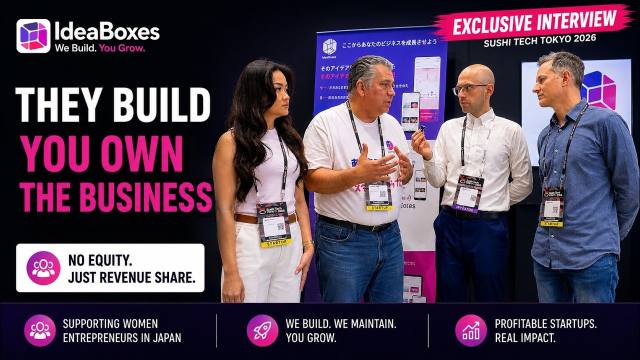 Interview at SusHi Tech Tokyo · 11 minTF+1
The AI SaaS partner model Japan might need
Todd Fabacher, Ayaka MuraiAt SusHi Tech Tokyo 2026, Erdinc met the team behind IdeaBoxes. They build the software with no upfront cost and take a share of revenue. Their goal is to help 50 women in Japan start software businesses.Read the feature →AI and building Podcast · 80 min